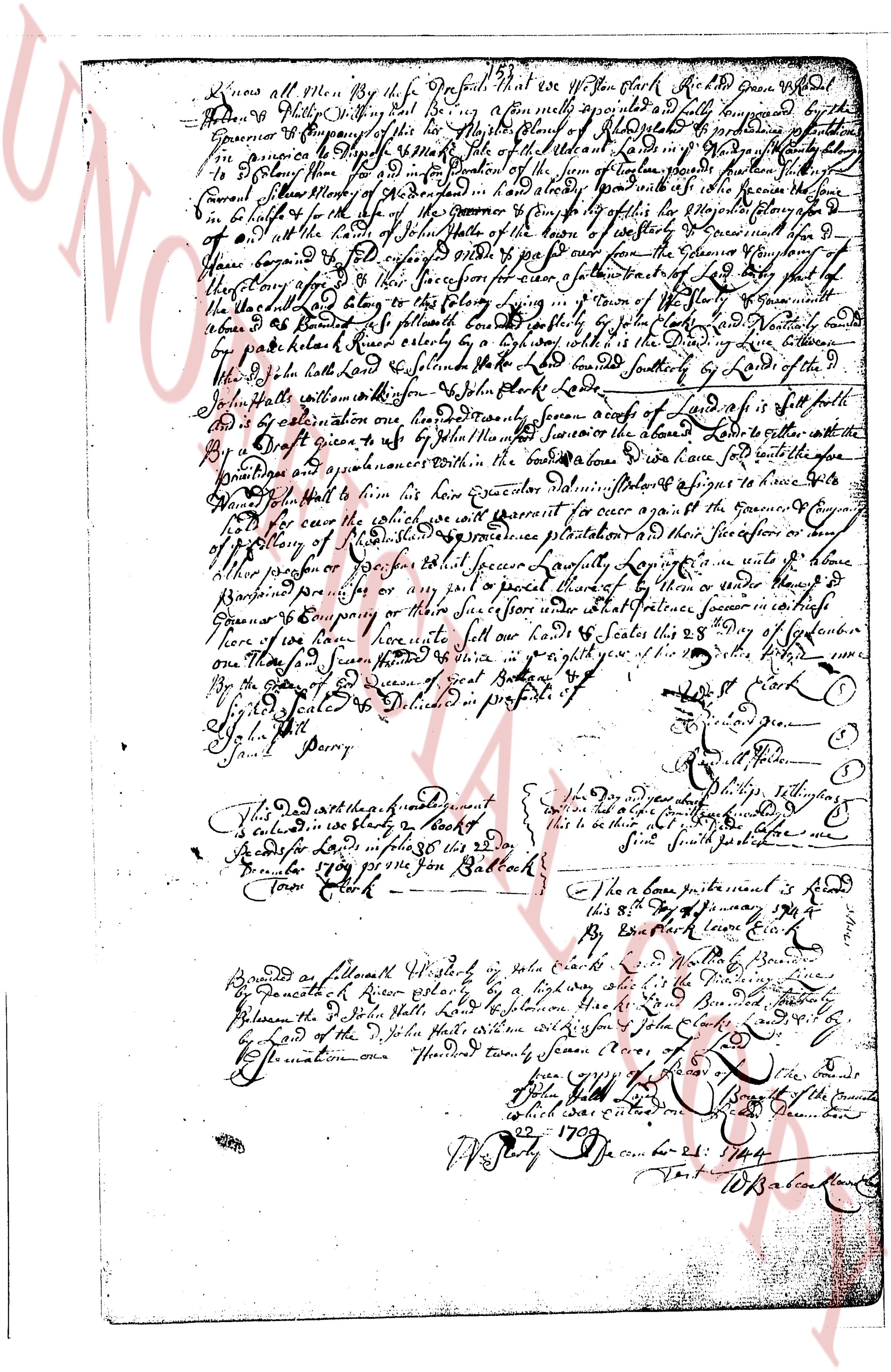
The instrument's own words
Attribution under review. The portal's file number is shared by more than one instrument, and the words below could not be placed with certainty on this one by their own evidence (page stamp, parties, dates); they may belong to a neighbouring instrument. Read them as the record of the page, not yet as this deed's own.
page 1
Lines all 8th day of [illegible] 1743 that we John Clark Clerk of the Genl Court
and Honble William Wanton Just of the peace appoint’d and duly sworn by the
Governor & Company of the colony of Rhode Island & Providence Plantations
do hereby on the oath of William Tate of the said colony and state of New England
to say that they are in a joint Action of Trespass on the land situated between the
currant flow of the Narragansett Bay in hand and actually possessed by the late
in half of the land of the Governor & Company of the colony by office of the Governor and Company
of all the lands of John Butler of the town of Smithfield of the colony of Providence and
thereupon paid of 1st’d’d’d’d’d’d’d’d’d’d’d’d’d’d’d’d’d’d’d’d’d’d’d’d’d’d’d’d’d’d’d’d’d’d’d’d’d’d’d’d’d’d’d’d’d’d’d’d’d’d’d’d’d’d’d’d’d’d’d’d’d’d’d’d’d’d’d’d’d’d’d’d’d’d’d’d’d’d’d’d’d’d’d’d’d’d’d’d’d’d’d’d’d’d’d’d’d’d’d’d’d’d’d’d’d’d’d’d’d’d’d’d’d’d’d’d’d’d’d’d’d’d’d’d’d’d’d’d’d’d’d’d’d’d’d’d’d’d’d’d’d’d’d’d’d’d’d’d’d’d’d’d’d’d’d’d’d’d’d’d’d’d’d’d’d’d’d’d’d’d’d’d’d’d’d’d’d’d’d’d’d’d’d’d’d’d’d’d’d’d’d’d’d’d’d’d’d’d’d’d’d’d’d’d’d’d’d’d’d’d’d’d’d’d’d’d’d’d’d’d’d’d’d’d’d’d’d’d’d’d’d’d’d’d’d’d’d’d’d’d’d’d’d’d’d’d’d’d’d’d’d’d’d’d’d’d’d’d’d’d’d’d’d’d’d’d’d’d’d’d’d’d’d’d’d’d’d’d’d’d’d’d’d’d’d’d’d’d’d’d’d’d’d’d’d’d’d’d’d’d’d’d’d’d’d’d’d’d’d’d’d’d’d’d’d’d’d’d’d’d’d’d’d’d’d’d’d’d’d’d’d’d’d’d’d’d’d’d’d’d’d’d’d’d’d’d’d’d’d’d’d’d’d’d’d’d’d’d’d’d’d’d’d’d’d’d’d’d’d’d’d’d’d’d’d’d’d’d’d’d’d’d’d’d’d’d’d’d’d’d’d’d’d’d’d’d’d’d’d’d’d’d’d’d’d’d’d’d’d’d’d’d’d’d’d’d’d’d’d’d’d’d’d’d’d’d’d’d’d’d’d’d’d’d’d’d’d’d’d’d’d’d’d’d’d’d’d’d’d’d’d’d’d’d’d’d’d’d’d’d’d’d’d’d’d’d’d’d’d’d’d’d’d’d’d’d’d’d’d’d’d’d’d’d’d’d’d’d’d’d’d’d’d’d’d’d’d’d’d’d’d’d’d’d’d’d’d’d’d’d’d’d’d’d’d’d’d’d’d’d’d’d’d’d’d’d’d’d’d’d’d’d’d’d’d’d’d’d’d’d’d’d’d’d’d’d’d’d’d’d’d’d’d’d’d’d’d’d’d’d’d’d’d’d’d’d’d’d’d’d’d’d’d’d’d’d’d’d’d’d’d’d’d’d’d’d’d’d’d’d’d’d’d’d’d’d’d’d’d’d’d’d’d’d’d’d’d’d’d’d’d’d’d’d’d’d’d’d’d’d’d’d’d’d’d’d’d’d’d’d’d’d’d’d’d’d’d’d’d’d’d’d’d’d’d’d’d’d’d’d’d’d’d’d’d’d’d’d’d’d’d’d’d’d’d’d’d’d’d’d’d’d’d’d’d’d’d’d’d’d’d’d’d’d’d’d’d’d’d’d’d’d’d’d’d’d’d’d’d’d’d’d’d’d’d’d’d’d’d’d’d’d’d’d’d’d’d’d’d’d’d’d’d’d’d’d’d’d’d’d’d’d’d’d’d’d’d’d’d’d’d’d’d’d’d’d’d’d’d’d’d’d’d’d’d’d’d’d’d’d’d’d’d’d’d’d’d’d’d’d’d’d’d’d’d’d’d’d’d’d’d’d’d’d’d’d’d’d’d’d’d’d’d’d’d’d’d’d’d’d’d’d’d’d’d’d’d’d’d’d’d’d’d’d’d’d’d’d’d’d’d’d’d’d’d’d’d’d’d’d’d’d’d’d’d’d’d’d’d’d’d’d’d’d’d’d’d’d’d’d’d’d’d’d’d’d’d’d’d’d’d’d’d’d’d’d’d’d’d’d’d’d’d’d’d’d’d’d’d’d’d’d’d’d’d’d’d’d’d’d’d’d’d’d’d’d’d’d’d’d’d’d’d’d’d’d’d’d’d’d’d’d’d’d’d’d’d’d’d’d’d’d’d’d’d’d’d’d’d’d’d’d’d’d’d’d’d’d’d’d’d’d’d’d’d’d’d’d’d’d’d’d’d’d’d’d’d’d’d’d’d’d’d’d’d’d’d’d’d’d’d’d’d’d’d’d’d’d’d’d’d’d’d’d’d’d’d’d’d’d’d’d’d’d’d’d’d’d’d’d’d’d’d’d’d’d’d’d’d’d’d’d’d’d’d’d’d’d’d’d’d’d’d’d’d’d’d’d’d’d’d’d’d’d’d’d’d’d’d’d’d’d’d’d’d’d’d’d’d’d’d’d’d’d’d’d’d’d’d’d’d’d’d’d’d’d’d’d’d’d’d’d’d’d’d’d’d’d’d’d’d’d’d’d’d’d’d’d’d’d’d’d’d’d’d’d’d’d’d’d’d’d’d’d’d’d’d’d’d’d’d’d’d’d’d’d’d’d’d’d’d’d’d’d’d’d’d’d’d’d’d’d’d’d’d’d’d’d’d’d’d’d’d’d’d’d’d’d’d’d’d’d’d’d’d’d’d’d’d’d’d’d’d’d’d’d’d’d’d’d’d’d’d’d’d’d’d’d’d’d’d’d’d’d’d’d’d’d’d’d’d’d’d’d’d’d’d’d’d’d’d’d’d’d’d’d’d’d’d’d’d’d’d’d’d’d’d’d’d’d’d’d’d’d’d’d’d’d’d’d’d’d’d’d’d’d’d’d’d’d’d’d’d’d’d’d’d’d’d’d’d’d’d’d’d’d’d’d’d’d’d’d’d’d’d’d’d’d’d’d’d’d’d’d’d’d’d’d’d’d’d’d’d’d’d’d’d’d’d’d’d’d’d’d’d’d’d’d’d’d’d’d’d’d’d’d’d’d’d’d’d’d’d’d’d’d’d’d’d’d’d’d’d’d’d’d’d’d’d’d’d’d’d’d’d’d’d’d’d’d’d’d’d’d’d’d’d’d’d’d’d’d’d’d’d’d’d’d’d’d’d’d’d’d’d’d’d’d’d’d’d’d’d’d’d’d’d’d’d’d’d’d’d’d’d’d’d’d’d’d’d’d’d’d’d’d’d’d’d’d’d’d’d’d’d’d’d’d’d’d’d’d’d’d’d’d’d’d’d’d’d’d’d’d’d’d’d’d’d’d’d’d’d’d’d’d’d’d’d’d’d’d’d’d’d’d’d’d’d’d’d’d’d’d’d’d’d’d’d’d’d’d’d’d’d’d’d’d’d’d’d’d’d’d’d’d’d’d’d’d’d’d’d’d’d’d’d’d’d’d’d’d’d’d’d’d’d’d’d’d’d’d’d’d’d’d’d’d’d’d’d’d’d’d’d’d’d’
The page as recorded