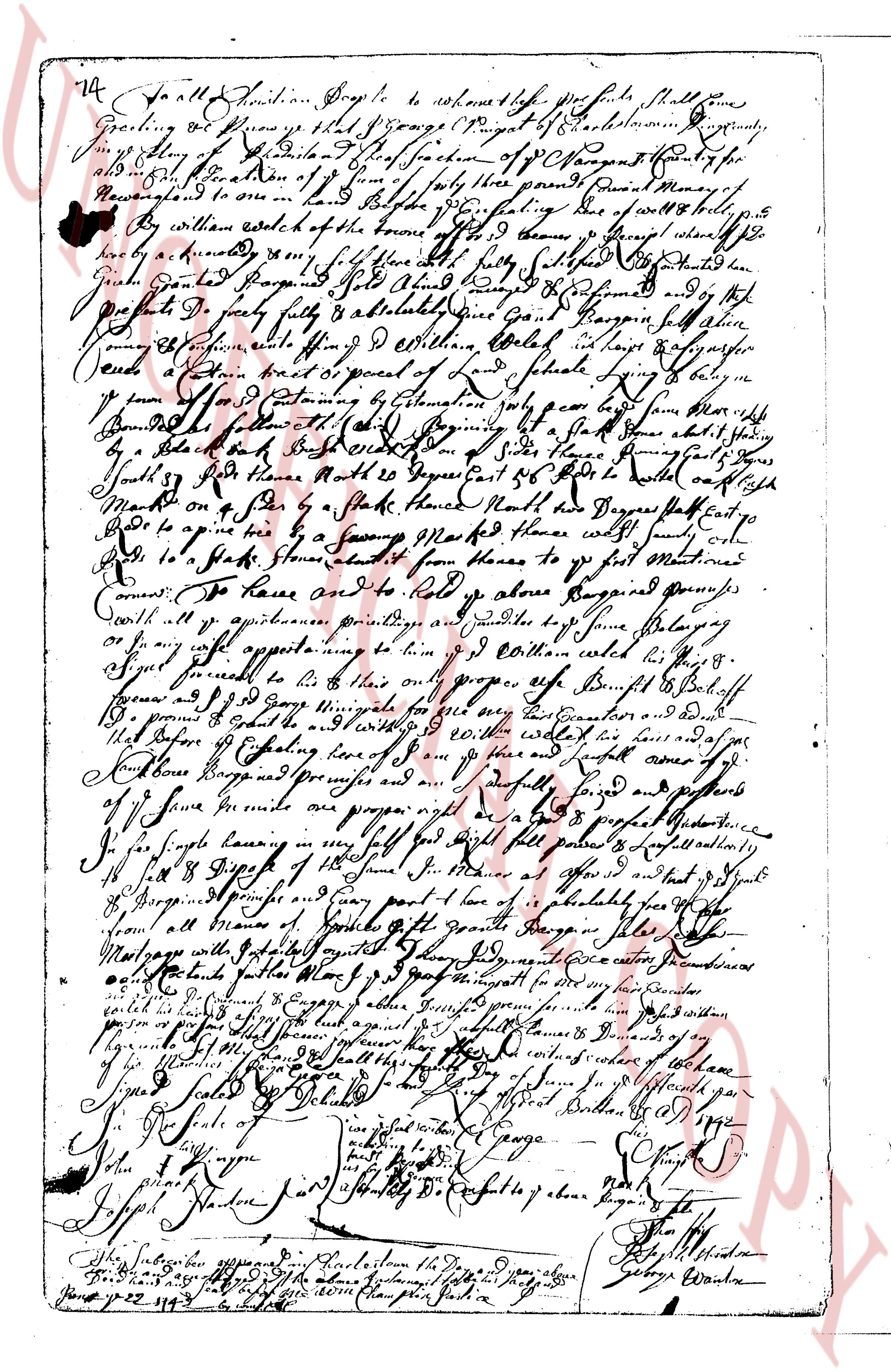
The instrument's own words
page 1
14 To all Christian People to whom it may concern these presents shall come
Greeting be it known ye that I George [illegible] of East Greenwich
indignity
my parting of A Piece of Land called A half fraction of G. G. Newport the p[ro]
old [illegible] in the Town of G[reenwich] of the said province called New
Newfoundland to a man named [illegible] for the paying of One [illegible] 10 Shillings
By witness search of the house of [illegible] I deem it to be of well & true
truth accurately & honestly and by the [illegible] of [illegible] I’ve’d’d’d’d’d’d’d’d’d’d’d’d’d’d’d’d’d’d’d’d’d’d’d’d’d’d’d’d’d’d’d’d’d’d’d’d’d’d’d’d’d’d’d’d’d’d’d’d’d’d’d’d’d’d’d’d’d’d’d’d’d’d’d’d’d’d’d’d’d’d’d’d’d’d’d’d’d’d’d’d’d’d’d’d’d’d’d’d’d’d’d’d’d’d’d’d’d’d’d’d’d’d’d’d’d’d’d’d’d’d’d’d’d’d’d’d’d’d’d’d’d’d’d’d’d’d’d’d’d’d’d’d’d’d’d’d’d’d’d’d’d’d’d’d’d’d’d’d’d’d’d’d’d’d’d’d’d’d’d’d’d’d’d’d’d’d’d’d’d’d’d’d’d’d’d’d’d’d’d’d’d’d’d’d’d’d’d’d’d’d’d’d’d’d’d’d’d’d’d’d’d’d’d’d’d’d’d’d’d’d’d’d’d’d’d’d’d’d’d’d’d’d’d’d’d’d’d’d’d’d’d’d’d’d’d’d’d’d’d’d’d’d’d’d’d’d’d’d’d’d’d’d’d’d’d’d’d’d’d’d’d’d’d’d’d’d’d’d’d’d’d’d’d’d’d’d’d’d’d’d’d’d’d’d’d’d’d’d’d’d’d’d’d’d’d’d’d’d’d’d’d’d’d’d’d’d’d’d’d’d’d’d’d’d’d’d’d’d’d’d’d’d’d’d’d’d’d’d’d’d’d’d’d’d’d’d’d’d’d’d’d’d’d’d’d’d’d’d’d’d’d’d’d’d’d’d’d’d’d’d’d’d’d’d’d’d’d’d’d’d’d’d’d’d’d’d’d’d’d’d’d’d’d’d’d’d’d’d’d’d’d’d’d’d’d’d’d’d’d’d’d’d’d’d’d’d’d’d’d’d’d’d’d’d’d’d’d’d’d’d’d’d’d’d’d’d’d’d’d’d’d’d’d’d’d’d’d’d’d’d’d’d’d’d’d’d’d’d’d’d’d’d’d’d’d’d’d’d’d’d’d’d’d’d’d’d’d’d’d’d’d’d’d’d’d’d’d’d’d’d’d’d’d’d’d’d’d’d’d’d’d’d’d’d’d’d’d’d’d’d’d’d’d’d’d’d’d’d’d’d’d’d’d’d’d’d’d’d’d’d’d’d’d’d’d’d’d’d’d’d’d’d’d’d’d’d’d’d’d’d’d’d’d’d’d’d’d’d’d’d’d’d’d’d’d’d’d’d’d’d’d’d’d’d’d’d’d’d’d’d’d’d’d’d’d’d’d’d’d’d’d’d’d’d’d’d’d’d’d’d’d’d’d’d’d’d’d’d’d’d’d’d’d’d’d’d’d’d’d’d’d’d’d’d’d’d’d’d’d’d’d’d’d’d’d’d’d’d’d’d’d’d’d’d’d’d’d’d’d’d’d’d’d’d’d’d’d’d’d’d’d’d’d’d’d’d’d’d’d’d’d’d’d’d’d’d’d’d’d’d’d’d’d’d’d’d’d’d’d’d’d’d’d’d’d’d’d’d’d’d’d’d’d’d’d’d’d’d’d’d’d’d’d’d’d’d’d’d’d’d’d’d’d’d’d’d’d’d’d’d’d’d’d’d’d’d’d’d’d’d’d’d’d’d’d’d’d’d’d’d’d’d’d’d’d’d’d’d’d’d’d’d’d’d’d’d’d’d’d’d’d’d’d’d’d’d’d’d’d’d’d’d’d’d’d’d’d’d’d’d’d’d’d’d’d’d’d’d’d’d’d’d’d’d’d’d’d’d’d’d’d’d’d’d’d’d’d’d’d’d’d’d’d’d’d’d’d’d’d’d’d’d’d’d’d’d’d’d’d’d’d’d’d’d’d’d’d’d’d’d’d’d’d’d’d’d’d’d’d’d’d’d’d’d’d’d’d’d’d’d’d’d’d’d’d’d’d’d’d’d’d’d’d’d’d’d’d’d’d’d’d’d’d’d’d’d’d’d’d’d’d’d’d’d’d’d’d’d’d’d’d’d’d’d’d’d’d’d’d’d’d’d’d’d’d’d’d’d’d’d’d’d’d’d’d’d’d’d’d’d’d’d’d’d’d’d’d’d’d’d’d’d’d’d’d’d’d’d’d’d’d’d’d’d’d’d’d’d’d’d’d’d’d’d’d’d’d’d’d’d’d’d’d’d’d’d’d’d’d’d’d’d’d’d’d’d’d’d’d’d’d’d’d’d’d’d’d’d’d’d’d’d’d’d’d’d’d’d’d’d’d’d’d’d’d’d’d’d’d’d’d’d’d’d’d’d’d’d’d’d’d’d’d’d’d’d’d’d’d’d’d’d’d’d’d’d’d’d’d’d’d’d’d’d’d’d’d’d’d’d’d’d’d’d’d’d’d’d’d’d’d’d’d’d’d’d’d’d’d’d’d’d’d’d’d’d’d’d’d’d’d’d’d’d’d’d’d’d’d’d’d’d’d’d’d’d’d’d’d’d’d’d’d’d’d’d’d’d’d’d’d’d’d’d’d’d’d’d’d’d’d’d’d’d’d’d’d’d’d’d’d’d’d’d’d’d’d’d’d’d’d’d’d’d’d’d’d’d’d’d’d’d’d’d’d’d’d’d’d’d’d’d’d’d’d’d’d’d’d’d’d’d’d’d’d’d’d’d’d’d’d’d’d’d’d’d’d’d’d’d’d’d’d’d’d’d’d’d’d’d’d’d’d’d’d’d’d’d’d’d’d’d’d’d’d’d’d’d’d’d’d’d’d’d’d’d’d’d’d’d’d’d’d’d’d’d’d’d’d’d’d’d’d’d’d’d’d’d’d’d’d’d’d’d’d’d’d’d’d’d’d’d’d’d’d’d’d’d’d’d’d’d’d’d’d’d’d’d’d’d’d’d’d’d’d’d’d’d’d’d’d’d’d’d’d’d’d’d’d’d’d’d’d’d’d’d’d’d’d’d’d’d’d’d’d’d’d’d’d’d’d’d’d’d’d’d’d’d’d’d’d’d’d’d’d’d’d’d’d’d’d’d’d’d’d’d’d’d’d’d’d’d’d’d’d’d’d’d’d’d’d’d’d’d’d’d’d’d’d’d’d’d’d’d’d’d’d’d’d’d’d’d’d’d’d’d’d’d’d’d’d’d’d’d’d’d’d’d’d’d’d’d’d’d’d’d’d’d’d’d’d’d’d’d’d’d’d’d’d’d’d’d’d’d’d’d’d’d’d’d’d’d’d’d’d’d’d’d’d’d’d’d’d’d’d’d’d’d’d’d’d’d’d’d’d’d’d’d’d’d’d’d’d’d’d’d’d’d’d’d’d’d’d’d’d’d’d’d’d’d’d’d’d’d’d’d’d’d’d’d’d’d’d’d’d’d’d’d’d’d’d’d’d’d’d’d’d’d’d’d’d’d’d’d
The page as recorded